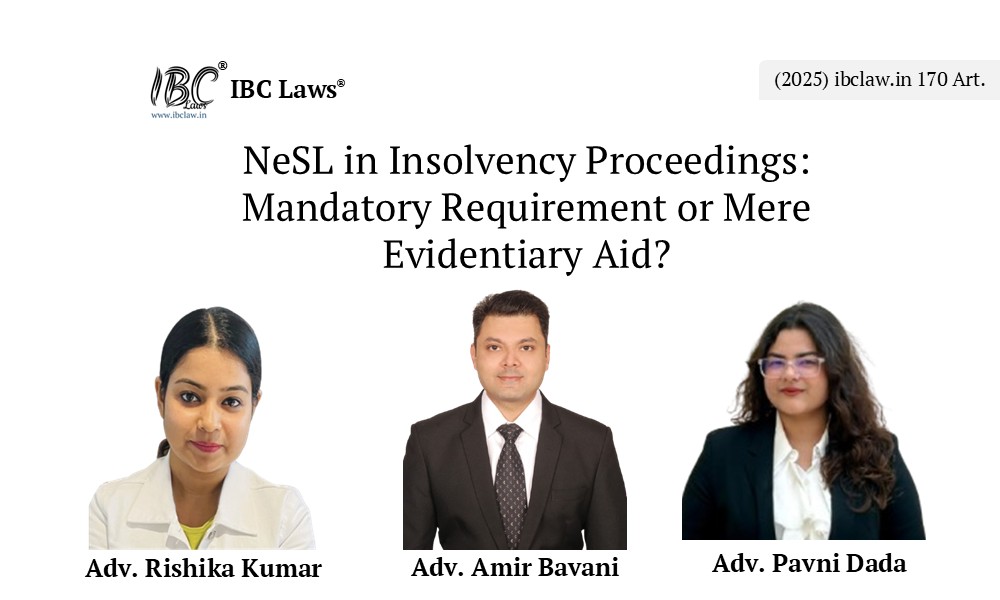
By Adv. Amir Bavani, Adv. Rishika Kumar & Adv. Pavni Dada, AB Legal
India’s Insolvency and Bankruptcy Code, 2016 (‘IBC/Code’) was enacted with the clear objective of providing a time-bound and transparent mechanism for resolving cases of corporate insolvency. The very foundation of the process lies in evidence, because a creditor cannot succeed in initiating insolvency proceedings unless it proves that money was disbursed as debt and that the corporate debtor has defaulted in repaying it. Traditionally, creditors relied upon documents such as bank statements, loan agreements, demand notices, and balance confirmations to prove the existence of debt and default. The Code introduced the idea of Information Utilities (‘IU’) to provide reliable, and authenticated repository of financial information that enables quick and undisputed proof of debt and default, thereby reducing delays in admission of insolvency applications.[1] National E-Governance Services Limited (‘NeSL’) is the first registered IU under the IBC framework.
Read the full article HERE.